
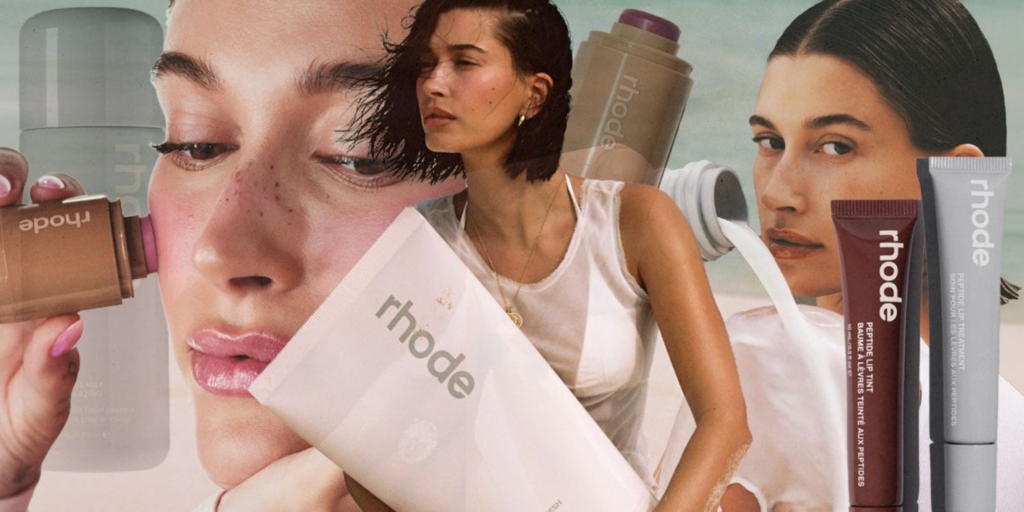
Celebrity beauty brands are everywhere, but celebrity recognition alone does not guarantee lasting attention. Rhode, Hailey Bieber’s skincare and makeup brand, offers a useful case study in how product launches can build momentum through product design, sensory cues, and experiences that extend beyond the initial reveal.
Launched in 2022, Rhode quickly became known for its glazed-skin aesthetic, minimalist packaging, and products that blur the line between beauty essentials and lifestyle accessories.
In May 2025, e.l.f. Beauty announced an agreement to acquire the brand in a deal valued at up to US$1 billion (IDR18 trillion) including a potential earnout tied to future growth.
Rhode’s approach offers lessons beyond celebrity influence. Its launches show how brands can give people several reasons to notice a product, talk about it, incorporate it into their routines, and keep engaging with the brand after launch day.
Five Product Launch Takeaways to Learn
Rhode’s product launches offer five lessons in how brands can build attention around a product, from the first teaser to the experience customers take away.
Choosing Who Gets to Know First
Hype can make a product launch look spontaneous. A teaser appears, people start talking, and demand seems to follow. However, as GrowLab explains in its article, the way a product is introduced can be just as important as the product itself.
In an interview with Vogue, Lauren Ratner, Rhode’s co-founder and chief brand officer, explained that Rhode combines data and consumer insights with intuition. Her account offers a useful starting point for understanding how Rhode approaches product development and marketing.
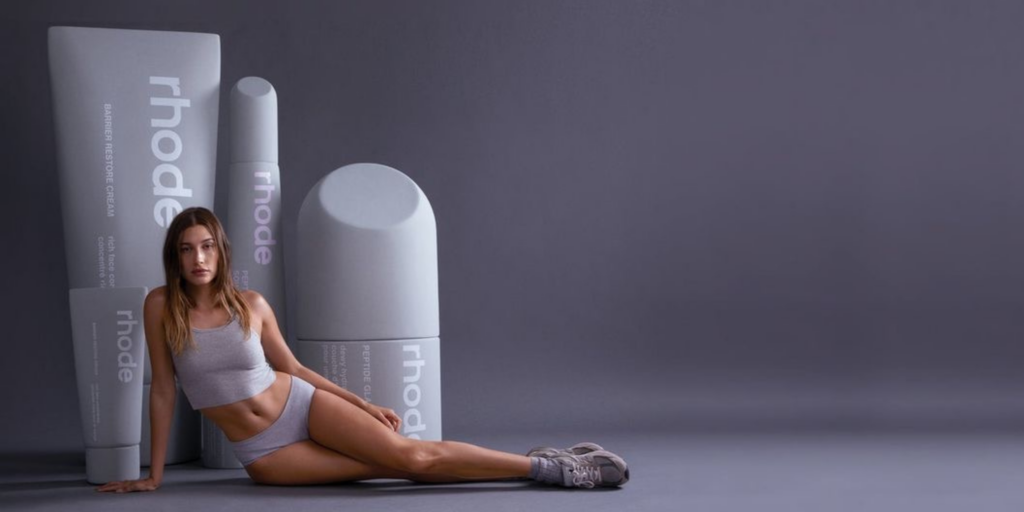
Rhode’s product launches often build anticipation through campaign imagery and social media teasers before a product becomes available. This gives audiences an initial look at what is coming before they can purchase it.
As Zalven Draxen, a writer, discusses in “A Product Launch Is a Chain of Moments, Not a Single Reveal,” a launch can be understood as a series of connected moments rather than one announcement.
So each stage can give audiences a reason to pay attention while gradually introducing the product.
Read more: Indonesian Delegation Takes the Stage at the Global Smart City Summit & Expo 2026
Giving People Something to Obsess Over
A distinctive product gives audiences something concrete to notice and remember. Rhode’s Snap-On Lip Case illustrates this through a design that combines an everyday accessory with a beauty essential.
The case attaches a Peptide Lip Treatment or Peptide Lip Tint to a compatible MagSafe phone case.
In her Vogue interview, Ratner explained that the idea came from a practical problem: customers already carried their lip treatments but could leave them at home or struggle to find them in a bag.
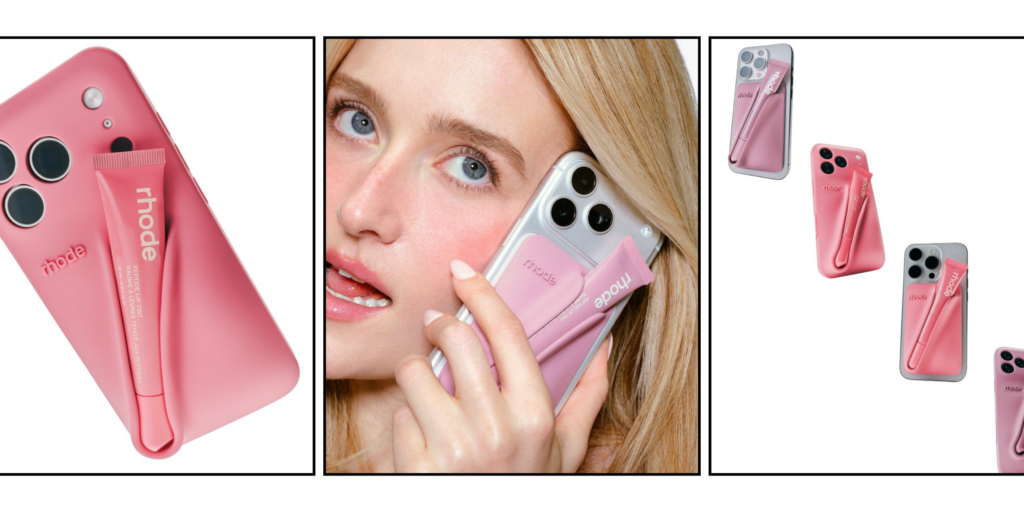
Combining the lip product with a phone case addresses that problem while creating a recognizable visual feature. The accessory keeps lip care close at hand and turns it into something that can be seen in everyday photographs and social media posts.
Rhode’s collaborations also introduce distinctive details. Its collaboration with Alexandra Leclerc included Pocket Pearl, a shimmery version of Pocket Blush, alongside a butterfly charm and Rhode Carabiner.
These additions give the collection a recognizable visual identity that extends beyond the makeup shades themselves.
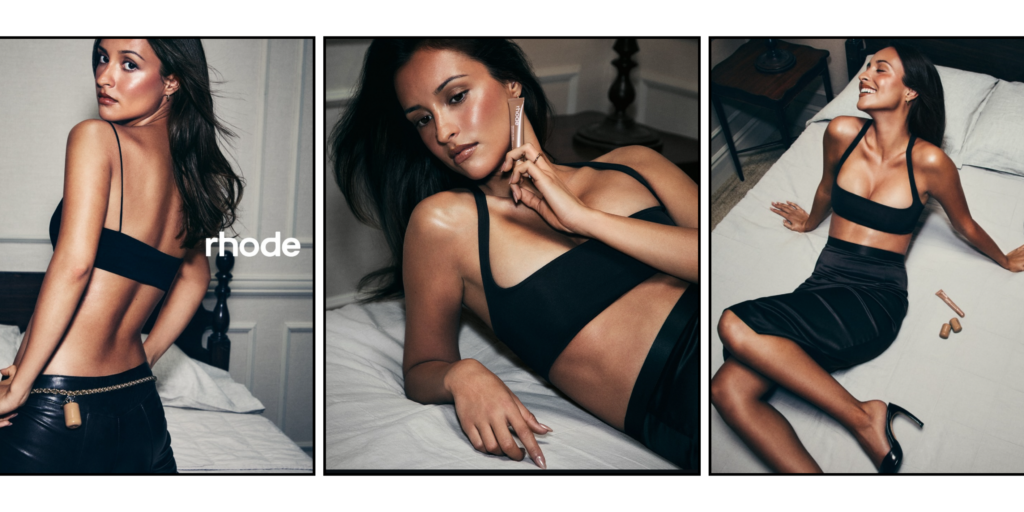
These examples show how a product’s design can give people a specific detail to notice, demonstrate, or share. The appeal comes from the product itself, while marketing helps bring that detail into focus.
Turning a Phrase Into a Ritual
Rhode’s glazed-skin aesthetic gives its skincare and makeup a shared identity. The brand also draws on familiar parts of everyday life, using food-inspired ingredients, names, and imagery to connect its products with routines people already know.
Take Caffeine Reset, which Rhode describes as a cup of coffee for the face. The sculpting cream mask contains caffeine derived from coffee beans, linking the product to the familiar role coffee plays in a morning ritual.
Pineapple Refresh uses a similar approach, bringing a recognizable fruit into its cleanser name and formula.
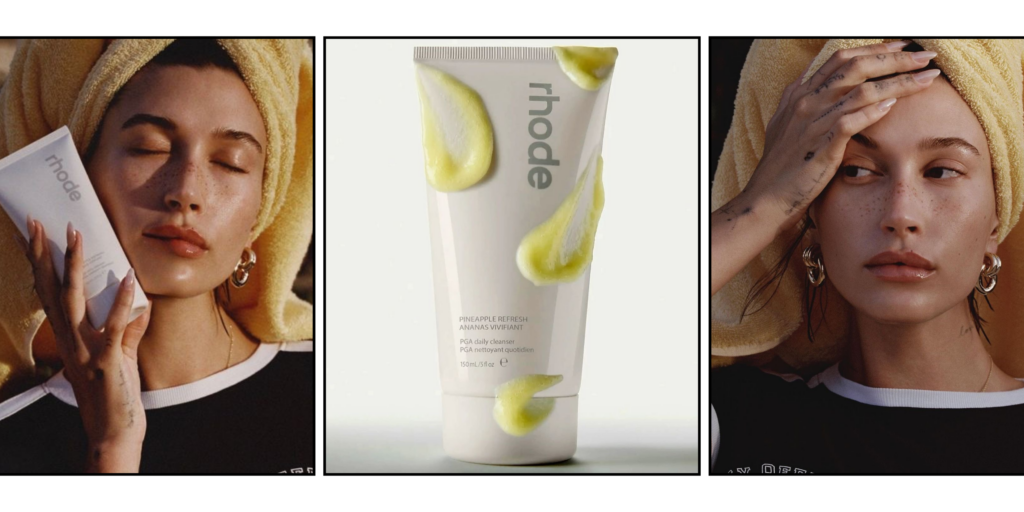
These associations extend to Rhode’s social media content. On its official Instagram, food-inspired imagery featuring chocolate, ice cream, marshmallows, and pancakes brings familiar foods and textures into the brand’s visual world.
The references are accessible and recognizable, giving audiences an everyday point of connection with a beauty brand.
Rhode’s product names carry the same idea. Peptide Lip Tint shades such as Espresso, Raspberry Jelly, Pretzel, and Jelly Bean draw on familiar foods and drinks.
Rather than relying on technical descriptions alone, these names give people an intuitive reference for imagining a shade and its character.
Read more: What Lemaire’s China Backlash Reveals About Global PR Today
Together, these choices connect Rhode’s products with familiar ingredients, routines, and sensory associations. Coffee can evoke a morning reset, fruit can make a cleanser feel recognizable, and food-inspired names can make makeup shades easier to picture.
By drawing on everyday rituals, Rhode creates shared cues across skincare and makeup, extending its identity beyond a single beauty category.
Designing a Reason to Return
A product’s design can shape how people use it long after its launch. Eddine Abid, a marketing consultant, explains that the work behind a launch needs to continue beyond launch day to maintain momentum and support product adoption.
Rhode’s Spot Case illustrates how product design can extend a product’s usefulness beyond its initial reveal.
The compact holder is designed to carry up to six Spotwear blemish patches and includes a mirror for on-the-go touch-ups.
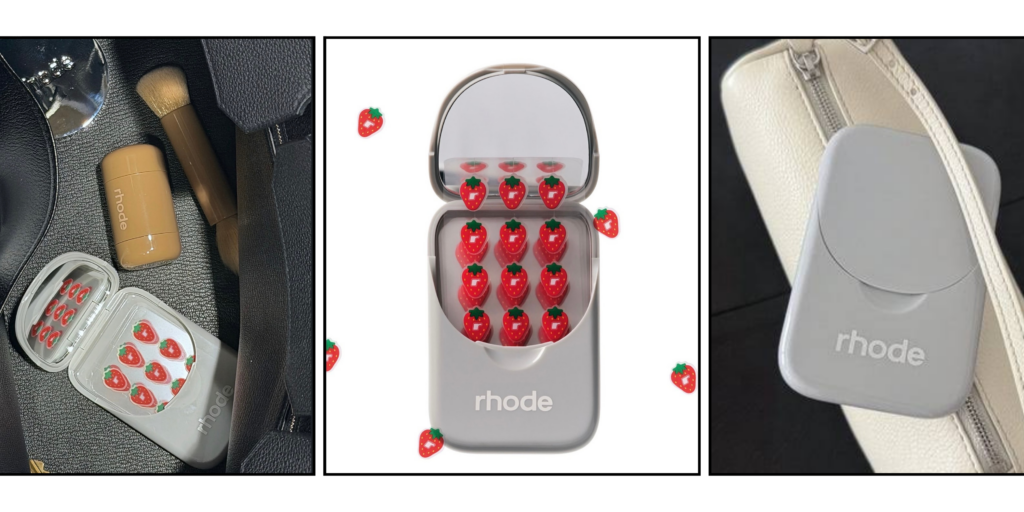
Its design combines storage and convenience in a compact accessory. The mirror supports quick touch-ups throughout the day, while the case keeps the patches together and easy to carry.
Its branded appearance also connects the accessory to Rhode’s wider product identity.
The Spot Case shows how packaging can do more than present a product attractively.
By combining recognizable design with practical features, Rhode extends the product’s value beyond its appearance on social media, while leaving customers curious about what the brand might introduce next.
Something to Hold Onto After the Reveal
Rhode also brings its brand into physical spaces, giving people a way to encounter its products beyond a campaign post or product page.
At Coachella 2026, the brand hosted Rhode World, an invite-only activation during the festival’s first weekend.
In its April 2026, report on fashion and beauty pop-ups at Coachella, Fashionista described activities including balloon-pop games, claw machines, early access to upcoming Rhode launches, and a touch-up room featuring Rhode products and Sephora makeup.
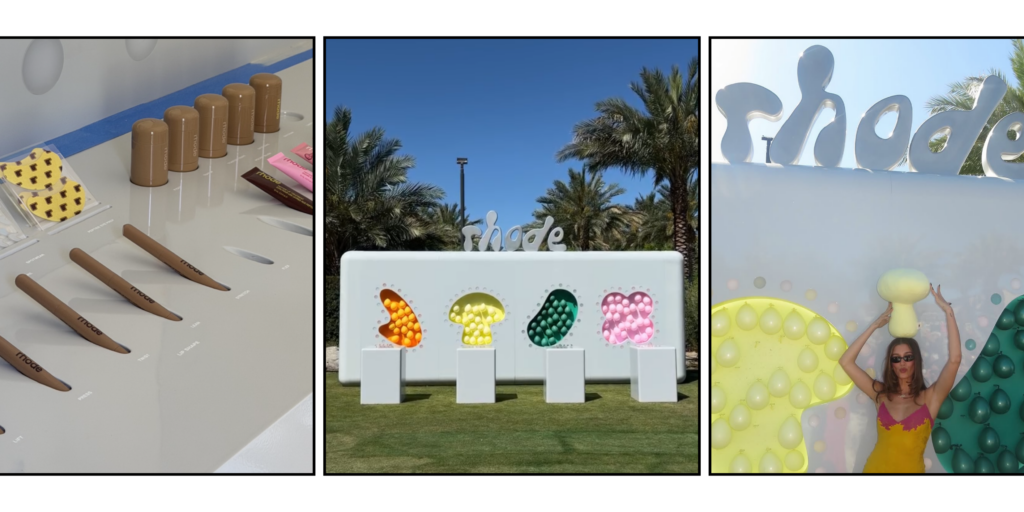
The activation brought product discovery into an interactive setting. Guests could explore upcoming launches while taking part in activities, while the touch-up room offered an opportunity to experience Rhode products in person.
By combining product discovery with interactive activities, Rhode World gave attendees several ways to engage with the brand beyond the usual launch day.
These experiences also created moments that guests could capture and share, extending the launch into social media conversations.
Read more: How to Distribute a Press Release Effectively
From Product to Culture
Rhode’s launches show how product design, sensory cues, collaborations, and physical experiences can reinforce a shared brand identity.
These elements give people different ways to engage with Rhode, from incorporating its products into daily routines to experiencing the brand in person.
Together, these choices give customers different ways to engage with the brand. They can use a product in their routine, recognize its visual language, carry it as an accessory, or take part in an event, where each interaction connects back to a broader identity.
According to Forbes, consumers increasingly consider whether a brand’s values align with their own.
This reflects a broader shift in how people relate to brands: a purchase can also express an affinity with the identity, values, or lifestyle a brand represents.
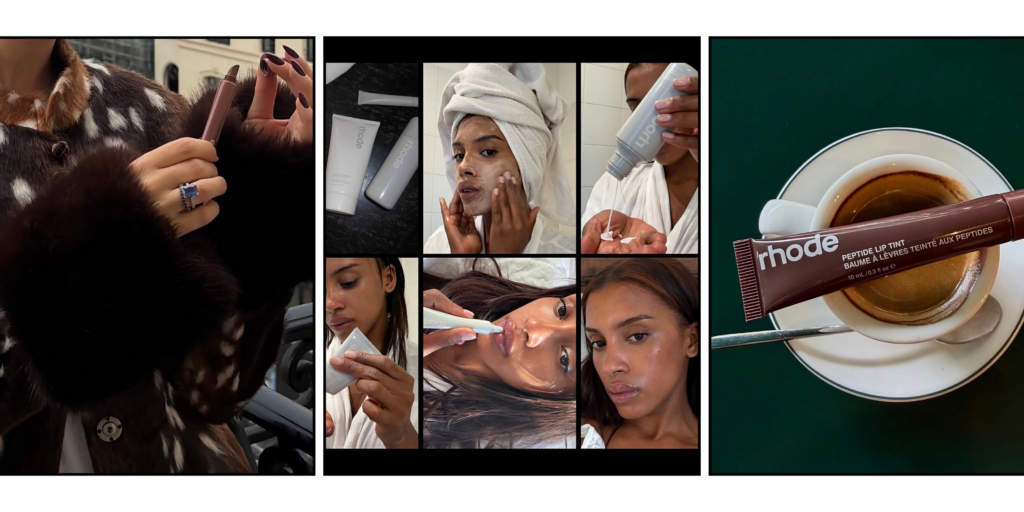
Rhode’s approach illustrates how a clear and focused brand can create that connection. Its products, visual language, and activations give customers multiple ways to engage with the brand and feel that it is relevant to their lives.
The opportunity lies in building a brand people can identify with and feel part of, beyond the products they purchase.
The lasting lesson from Rhode is that product launches work best as part of a coherent brand identity.
When product function, creative direction, and customer experiences reinforce the same point of view, each launch can strengthen what people recognize and value about the brand.
That is how a product can become part of a wider culture, giving people something meaningful to connect with and talk about.